← Back to Teaching

Calculus III — Multivariable Differential Calculus

Calculus III extends the concepts of limits, continuity, and differentiation to functions of several variables. The course begins with the geometry of Euclidean space $\mathbb{R}^n$ and the study of curves, introducing key concepts such as velocity, curvature, and torsion using vector-valued functions.

A significant portion of the course is dedicated to the differential calculus of scalar and vector fields. We rigorously develop the notions of differentiability, partial derivatives, and the gradient, leading to local approximations via Taylor polynomials. Central to the theoretical framework are the Inverse and Implicit Function Theorems, which are studied in depth.

The final section focuses on optimization problems. We explore methods for finding local maxima and minima using the Hessian matrix and apply the method of Lagrange multipliers to solve constrained optimization problems, providing a robust toolkit for modeling in higher dimensions.

Notes

This document compiles selected notes and examples developed during the course. While not intended as a comprehensive textbook, these materials provide detailed explanations of key topics and are designed to serve as a robust supplementary resource for students.
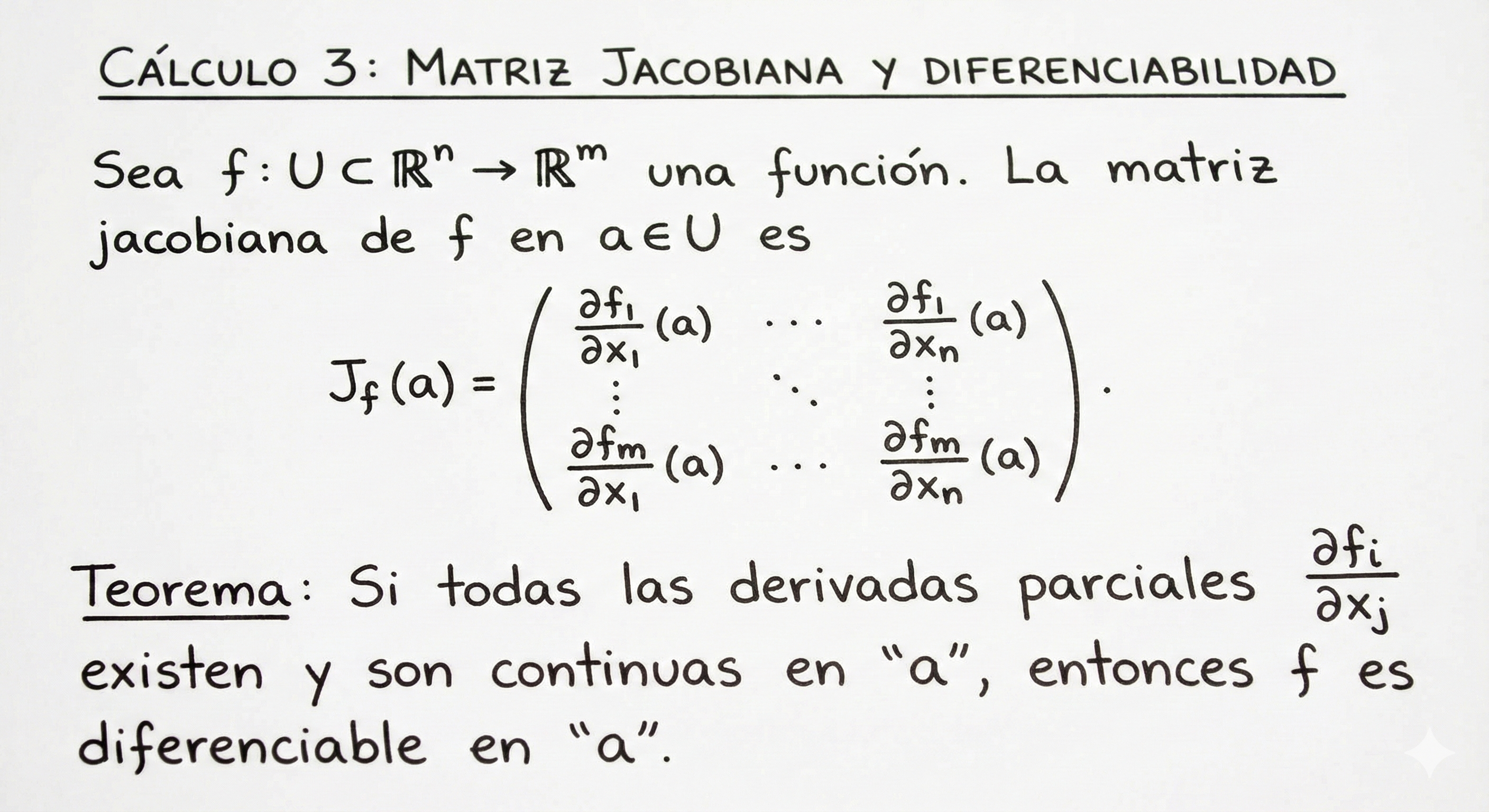
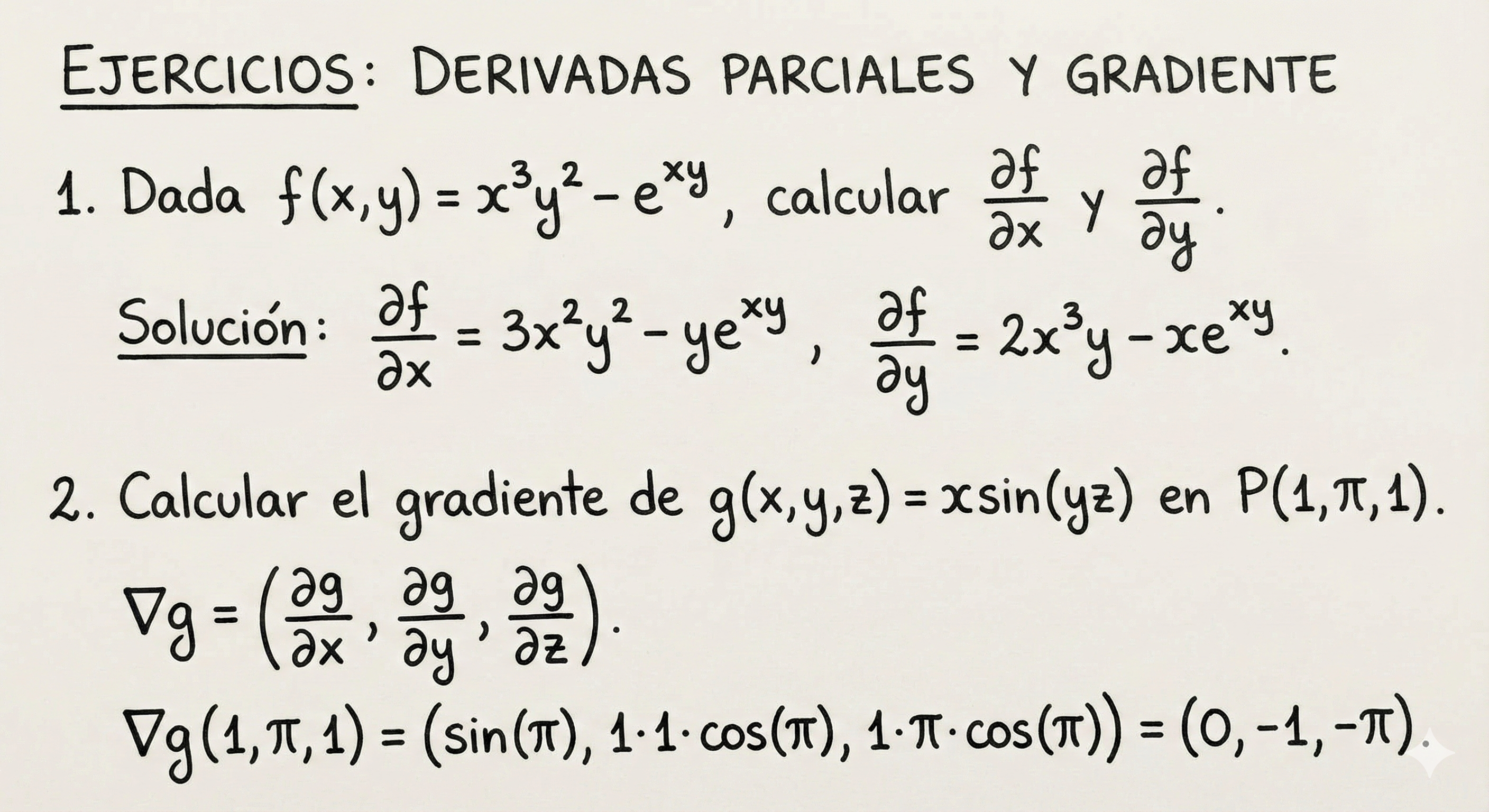
Calculus III notes preview

Problem Sets & Homework

As with the notes, this section contains a compilation of various homework assignments and problem sets. Although they do not follow a unified structure, they may serve as valuable practice material for anyone who wishes to reinforce their understanding of the topics covered in the course.

Calculus III exam preview

← Back to Teaching